High Temperature Tensile Tester Supplier for South Africa
MCS Mechatronic manufactures special furnaces and hot tensile testing set-ups in Kolhapur, India, and supplies them to power plant suppliers, boiler and pressure-part makers, refineries and research labs in South Africa. The furnaces test metals, composites, rubber and plastics at elevated temperature, and can be supplied with a new MCS machine or fitted to an existing UTM of any make.
South Africa has the most developed industrial base in Africa, with mining, automotive manufacturing, steel production, power generation and a large lifting-equipment sector. SANAS-accredited labs, OEM supplier requirements and mining safety rules keep demand for precise, traceable material testing high. Materials for boilers, turbines and process plants must show their strength at service temperature, which is exactly what a hot tensile test measures.
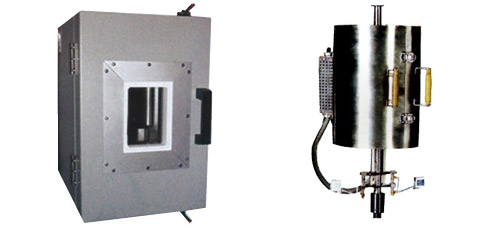
MCS Hot Tensile Testing Set-up
The split furnace is an add-on attachment, so labs in South Africa can upgrade a UTM they already own.
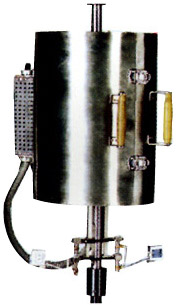
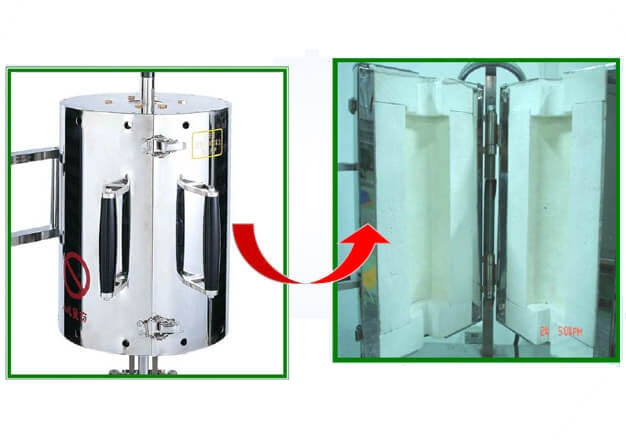
Hot Temperature Tensile Testing Furnace
Single, two or three zone
Split-type furnace that fits new or existing UTMs and creep machines for elevated-temperature tests.
- Temperature range 300 to 1200 °C
- Split design for easy sample loading
- Single, two or three heating zones
- PID controller with thyristor-controlled heaters
- Fits any make and capacity of UTM with minor modification
Hot Tensile Testing Specifications
| Temperature range | 300 to 1200 °C |
| Furnace design | Split type, add-on and detachable |
| Heating zones | Single, two or three zones |
| Control | PID temperature controller with thyristor-controlled heaters |
| Accessories | Pull rods, grips and muffles in heat-resistant steel or titanium alloys |
| Compatibility | Screw-driven and servo-hydraulic UTMs, creep testing machines; MCS or other makes |
Full data is on the hot temperature tensile testing page.
Hot Tensile Testing Equipment
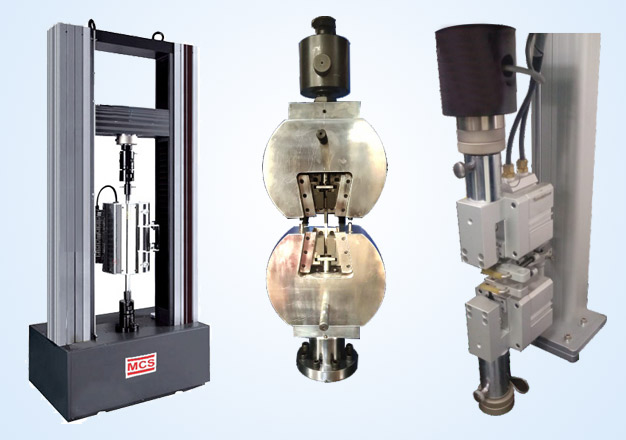
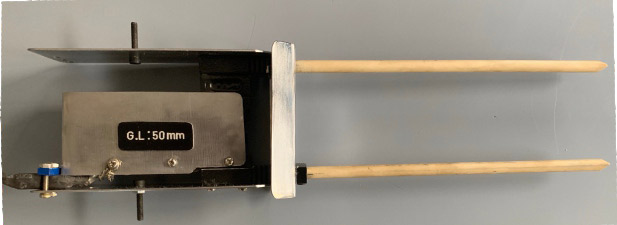
Hot Tensile Testing Applications in South Africa
Our machines are used by mining houses, automotive OEMs and component suppliers, steel producers, lifting-gear makers, power utilities, SANAS-accredited labs and universities. Typical South African applications include:
Power generation
Boiler tubes, steam pipe and turbine materials
Oil, gas and petrochemicals
Pressure-part and heat-exchanger steels
Steel producers
Elevated-temperature properties of creep-resisting grades
Fasteners and alloys
High-temperature bolting and alloy steels
Composites and polymers
Behaviour of plastics and composites under heat
Research institutes
Material development and qualification work
Testing Standards Supported
With 300 to 1200 °C capability and PID control, MCS furnaces are used for elevated-temperature tensile tests under methods such as ASTM E21 and ISO 6892-2.
In South Africa, product conformity is overseen by SABS (South African Bureau of Standards), and laboratories that issue accredited reports work under SANAS (South African National Accreditation System). Test data is recorded through the UTM's software along with the furnace temperature for your lab records.
Cities We Serve in South Africa
We supply hot temperature tensile testing machines to industrial cities and project sites across South Africa, including:
Export, Shipping & Support for South Africa
Export Packing & Shipping
Machines are packed in seaworthy export cases and shipped from India to Port of Durban, Port of Cape Town and Port of Ngqura.
Export Documents
Commercial invoice, packing list, certificate of origin and the machine's calibration certificate are supplied with every shipment.
Online Training & Support
Online operator training on the machine and its software, with remote technical support from our team in India.
Frequently Asked Questions
Do you export hot tensile testing equipment to South Africa?
Yes. MCS Mechatronic manufactures high-temperature furnaces and hot tensile testing set-ups in Kolhapur, India, and exports them to South Africa through ports such as Port of Durban and Port of Cape Town.
Can the furnace be fitted to our existing UTM?
Yes. MCS furnaces can be fitted to any new or old universal testing machine of any make and capacity with minor modifications, and can be detached easily.
What temperature range is available?
From 300 to 1200 °C, with a choice of single, two or three heating zones and PID control.
Which grips and pull rods are used at high temperature?
Pull rods, grips and muffles are made in heat-resistant steel, titanium alloys and similar materials to suit the test temperature.
Can MCS machines support testing in SANAS-accredited labs?
Accredited labs in South Africa work to ISO and ASTM methods under SANAS. MCS furnaces cover 300 to 1200 °C with PID temperature control, and test data can be recorded with your UTM software for your SABS or client records. Machines can be verified on site by your accredited calibration provider after delivery.
Can the machine run on the power supply used in South Africa?
The supply voltage depends on the model. South Africa's three-phase supply is 400 V at 50 Hz, so please mention your site voltage and frequency in your enquiry so we can confirm the right electrical configuration.
Get a Hot Tensile Testing Quotation for South Africa
Tell us your existing UTM make and capacity, the test temperature and specimen size, and we will propose the right set-up.
Send Enquiry WhatsAppHot Temperature Tensile Testing Machines in Other Countries
Other Testing Machines in South Africa
- Universal Testing Machines in South Africa
- Rockwell Hardness Testers in South Africa
- Impact Testing Machines in South Africa
- Brinell Hardness Testers in South Africa
- Spring Testing Machines in South Africa
- Vickers Hardness Testers in South Africa
- Profile Projectors in South Africa
- Vickers cum Brinell Hardness Testers in South Africa
- Chain & Rope Testing Machines in South Africa
- Drop Weight Tear Testing Machines in South Africa
- Creep & Stress Relaxation Testing Machines in South Africa
- Dispergraders in South Africa