Dispergrader Supplier for Indonesia
MCS Mechatronic manufactures the Dispergrader in Kolhapur, India, and supplies it to tyre makers, rubber compounders, carbon black producers and rubber research labs in Indonesia. The instrument measures the degree of dispersion of carbon black and fillers in rubber by automated image analysis of a cut specimen surface.
Indonesia is South-East Asia's largest economy, with a steel centre in Cilegon, nickel processing in Sulawesi, a major automotive cluster around Bekasi and Karawang, and a big rubber and tyre industry. SNI marking for steel and building materials makes in-house testing a must for producers. Poor filler dispersion weakens rubber and shortens tyre life, so dispersion grading is a routine check in compound mixing.
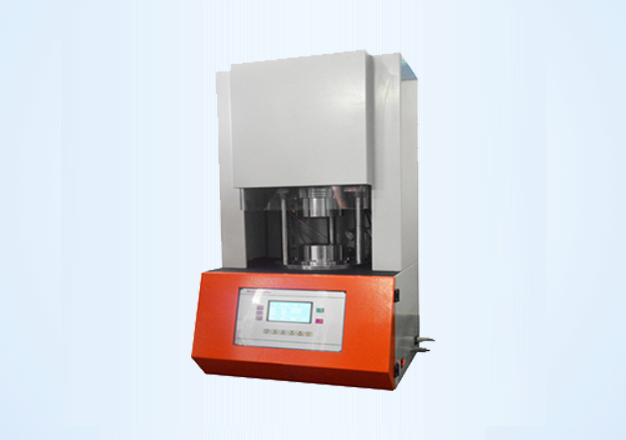
MCS Dispergrader
A camera on a precision rail scans the specimen automatically and the software grades dispersion against image banks.
Dispergrader – Carbon Black Dispersion Tester
With Pathfinder software
Automated image-analysis instrument for dispersion of carbon black and fillers in black, white and coloured compounds.
- Meets ASTM D7723 and ISO 11345 (methods C, D and E)
- Laterally translating camera on a precision rail
- Four-position LED lighting
- Colour camera with autofocus
- PC and widescreen monitor included
Dispergrader Specifications
| Standards | ASTM D7723; ISO 11345 methods C, D and E |
| Results | Dispersion %Z, %X and Y values; agglomerate size, number and location |
| Imaging | Colour camera with autofocus on precision rail; four-position LED lighting |
| Scanning | Automatic and manual scanning of multiple areas per specimen |
| Software | Pathfinder: histograms, analytical data, image database, five image banks on split screen |
| Included | PC and widescreen monitor |
Full data is on the Dispergrader page.
Dispergrader Applications in Indonesia
Our machines are used by steel and nickel producers, automotive component makers, rubber and tyre factories, power plants, construction material labs and universities. Typical Indonesian applications include:
Tyre manufacturers
Dispersion checks on tread and sidewall compounds
Rubber compounders
Mixing quality control batch by batch
Carbon black producers
Dispersibility of carbon black grades
Technical rubber goods
Belts, hoses, seals and moulded parts
White and coloured compounds
Silica and filler dispersion in non-black rubber
Rubber research labs
Compound development and mixer optimisation
Testing Standards Supported
The MCS Dispergrader meets ASTM D7723 and ISO 11345 (methods C, D and E), the standard methods for rating macro-dispersion of fillers in rubber.
In Indonesia, product conformity is overseen by BSN (National Standardization Agency), which issues SNI standards, and laboratories that issue accredited reports work under KAN (National Accreditation Committee). The Pathfinder software stores dispersion values, histograms and images in a database for batch reports.
Cities We Serve in Indonesia
We supply dispergraders to industrial cities and project sites across Indonesia, including:
Export, Shipping & Support for Indonesia
Export Packing & Shipping
Machines are packed in seaworthy export cases and shipped from India to Tanjung Priok Port, Jakarta, Tanjung Perak Port, Surabaya and Belawan Port, Medan.
Export Documents
Commercial invoice, packing list, certificate of origin and the machine's calibration certificate are supplied with every shipment.
Online Training & Support
Online operator training on the machine and its software, with remote technical support from our team in India.
Frequently Asked Questions
Do you export the Dispergrader to Indonesia?
Yes. MCS Mechatronic manufactures the Dispergrader in Kolhapur, India, and exports it to Indonesia through ports such as Tanjung Priok Port, Jakarta and Tanjung Perak Port, Surabaya.
What does a Dispergrader measure?
It measures the degree of dispersion of carbon black and other fillers in rubber, reporting dispersion %Z, %X and Y values along with the size, number and location of agglomerates.
Can it analyse white and coloured compounds?
Yes. The colour camera can analyse black, white and coloured compounds.
Which standards does it meet?
ASTM D7723 and ISO 11345 (methods C, D and E).
Can MCS machines support SNI testing in Indonesia?
SNI standards for steel and building materials reference ISO and ASTM test methods. The MCS Dispergrader meets ASTM D7723 and ISO 11345 (methods C, D and E), and its software stores dispersion values, histograms and images for your SNI or client records. We supply the documents your importer needs for customs clearance.
Can the machine run on the power supply used in Indonesia?
The supply voltage depends on the model. Indonesia's three-phase supply is 380 V at 50 Hz, so please mention your site voltage and frequency in your enquiry so we can confirm the right electrical configuration.
Get a Dispergrader Quotation for Indonesia
Tell us the compounds you test and your daily sample volume, and we will send a quotation.
Send Enquiry WhatsAppDispergraders in Other Countries
Other Testing Machines in Indonesia
- Universal Testing Machines in Indonesia
- Rockwell Hardness Testers in Indonesia
- Impact Testing Machines in Indonesia
- Brinell Hardness Testers in Indonesia
- Spring Testing Machines in Indonesia
- Vickers Hardness Testers in Indonesia
- Profile Projectors in Indonesia
- Vickers cum Brinell Hardness Testers in Indonesia
- Hot Temperature Tensile Testing Machines in Indonesia
- Chain & Rope Testing Machines in Indonesia
- Drop Weight Tear Testing Machines in Indonesia
- Creep & Stress Relaxation Testing Machines in Indonesia